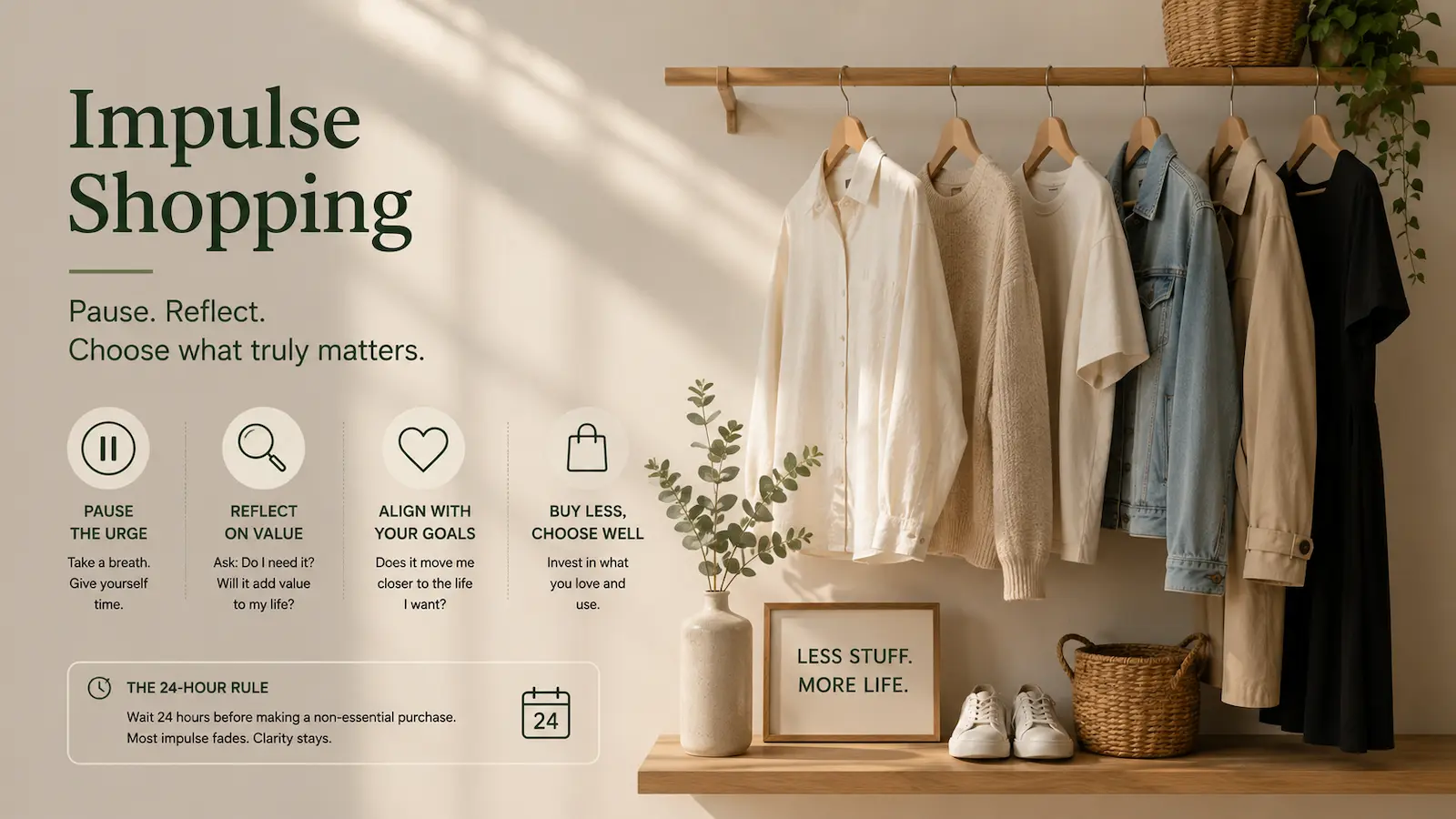
I used to be a very good customer. Online shopping had reduced the friction of spending to almost nothing — a few taps, a saved card, and something new was on its way. I wasn't buying things I didn't want. I was buying things I wanted in the moment, which is a different and more subtle problem.
The 30-day rule is almost insultingly simple: when you want to buy something non-essential, write it down with the date, and wait thirty days. If you still want it after thirty days and it fits your budget and your life, buy it. If not, cross it off the list.
Why thirty days works
The impulse to buy something is strongest immediately upon encountering it — whether in a shop window, a social media ad, or a friend's recommendation. That impulse is real but it is not stable. Most wants follow a predictable curve: intense at first, fading with time, gone within weeks if left unfulfilled.
"Most things we want urgently, we don't need at all. Time is the most honest filter we have."
Thirty days is long enough for the emotional charge of a want to dissipate, leaving only genuine need or considered desire behind. It's also long enough for you to do proper research, find a better version, discover you already own something similar, or simply forget about it entirely.
How to use the rule in practice
Keep a running list — a notes app, a small notebook, the back of a journal page. When something catches your attention, add it immediately: what it is, where you saw it, roughly what it costs, and today's date. Then close the tab or walk away from the shop.
Before adding something to your list, ask: am I buying this because I genuinely need or want it, or because I'm bored, stressed, or seeking a small dopamine hit? Honest answers to this question are surprisingly revealing.
What happens after thirty days
In my experience, roughly seventy percent of things on the list simply no longer appeal after a month. The want fades, or something else fills the space, or the specific item gets replaced by a better version in your mind. You review the list and think: why did I want that?
The thirty percent that survive — those are the purchases worth making. You've demonstrated to yourself that the desire is consistent and considered. You've had time to research alternatives. You're buying with full intention rather than fleeting impulse.
- Items bought this way get used more and appreciated longer
- You naturally start buying higher quality as you buy less overall
- The list itself becomes a record of your evolving values and priorities
- Savings increase without feeling like deprivation
A year into using the 30-day rule, my flat is calmer, my bank account is healthier, and I own fewer things I'm indifferent to. More importantly, the things I do own feel chosen — genuinely wanted, not just arrived. That's a different relationship with objects entirely.