It started with a jar. I was standing in my kitchen, looking at the overflowing bin after a single week of cooking, and I felt a quiet but persistent unease. Not guilt, exactly — more like a low hum of awareness that something didn't add up. I was someone who cared about the planet, yet my kitchen told a different story every Monday morning.
The zero-waste kitchen isn't about perfection. It's not about having a spotless pantry of matching glass jars or producing just one mason jar of landfill waste per year. It's about making small, considered swaps — and then letting those become habits so natural you barely notice them.
Start with what you throw away most
Before buying anything new, spend one week simply observing. What fills your bin most quickly? For most people it's food packaging — cling film, plastic bags, single-use containers. For others it's food waste itself — half-used vegetables, wilted herbs, forgotten leftovers. Your personal waste profile tells you exactly where to start.
"The most sustainable kitchen isn't the one with the most eco-products — it's the one that wastes the least."
The swaps that actually matter
Replace before you buy
The most common zero-waste mistake is rushing out to replace everything at once. This defeats the purpose — producing waste to reduce waste. Instead, use up or wear out what you already have, then replace it with something better when the time comes.
- Cling film → beeswax wraps or a simple plate on top of a bowl
- Plastic bags → reusable cotton produce bags (works for groceries too)
- Disposable sponges → a wooden brush or loofah that composts at end of life
- Plastic bottles of cleaning product → concentrated tablets dissolved in a reused bottle
- Paper towels → a stack of cut-up old t-shirts or proper cloth napkins
Bulk buying changes everything
If there is one habit that will have the greatest impact on kitchen waste, it's buying in bulk. Grains, lentils, nuts, spices — when you bring your own containers to a bulk store, you eliminate packaging entirely at the source. The food is often fresher and cheaper too.
No bulk store nearby? Start by buying the largest size available of things you use regularly. A 1kg bag of oats produces the same amount of packaging as a 500g bag — but feeds you twice as long.
Put a small bowl on your kitchen counter for vegetable scraps — onion peels, carrot tops, celery ends. After a week, simmer them in water for 30 minutes. You just made free, zero-waste vegetable stock. Freeze it in ice cube trays for easy use.
Composting — the final loop
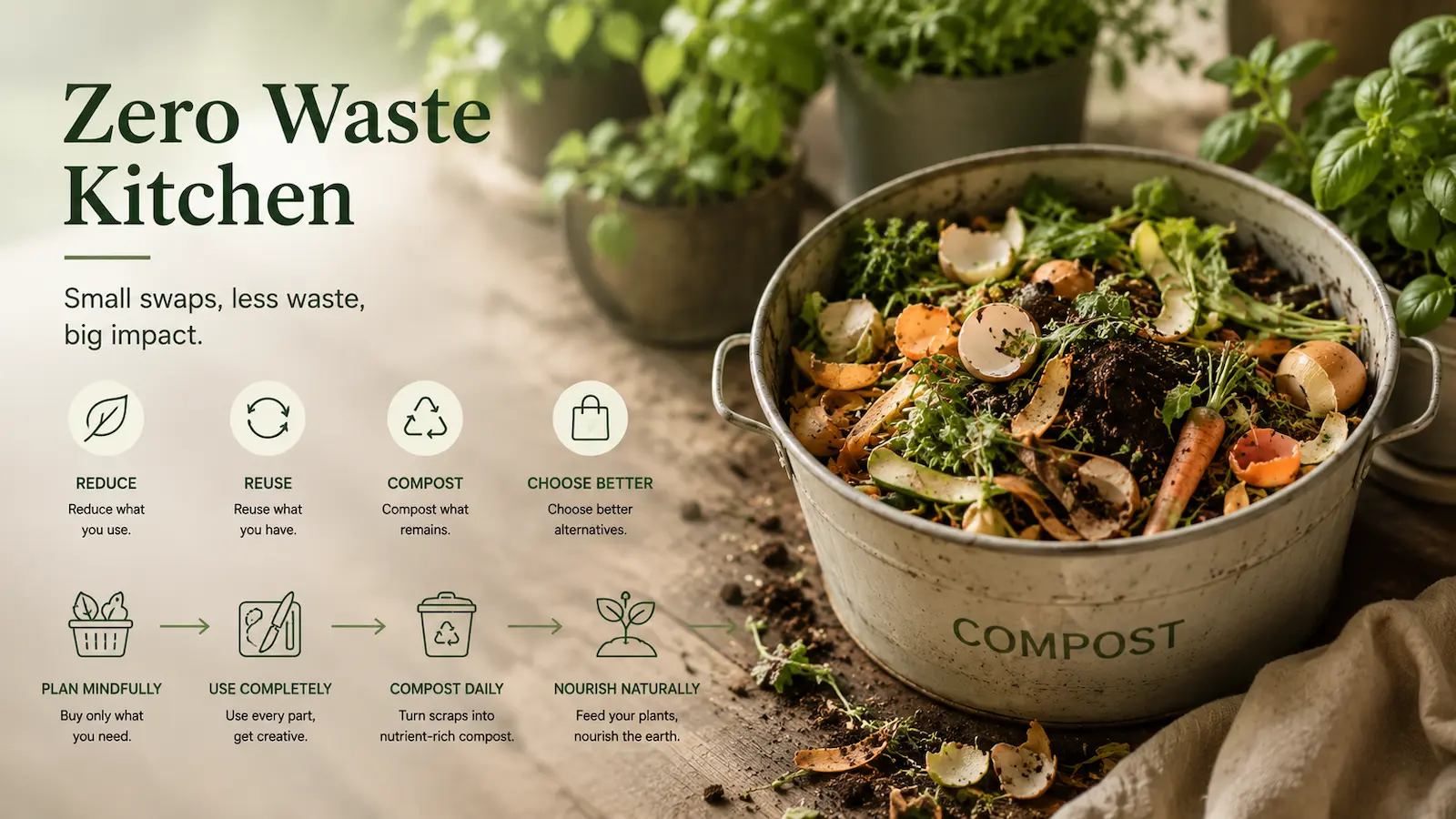
Even the most careful zero-waste kitchen generates food scraps. Composting closes the loop — turning what would be landfill into rich soil for plants. If you have outdoor space, a simple compost bin works. In a flat, a small bokashi bin ferments scraps in a sealed container with no smell.
Many cities now offer food waste collection too — check your local council. The barrier to composting is usually smaller than people imagine.
The zero-waste kitchen isn't a destination. It's a direction. Every jar you refill, every scrap you compost, every disposable item you replace with something durable — it all adds up quietly and surely. You don't have to do everything. You just have to start somewhere, and then keep going.