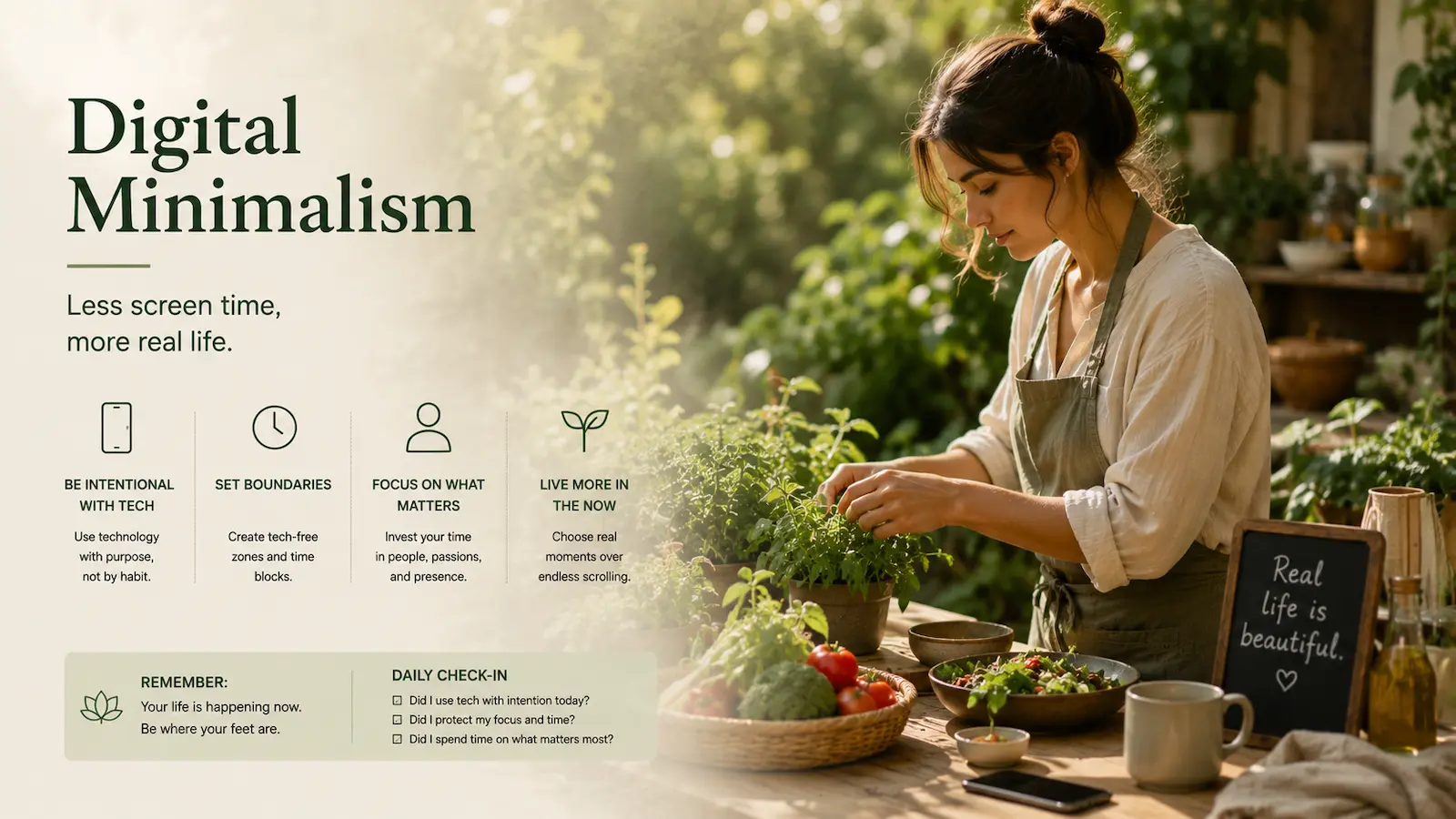
We've spent years decluttering our homes, curating our wardrobes, simplifying our diets. We've thought carefully about what objects deserve space in our physical lives. And then we hand the most intimate, continuous access to ourselves — our attention, our emotional bandwidth, our idle moments — to apps designed by teams of engineers whose job is to make sure we never stop scrolling.
Digital minimalism applies the same thinking we bring to physical possessions to our digital lives. Not digital abstinence. Not a dramatic phone-smashing moment. Simply: what technology genuinely adds value to my life, and what am I using out of habit, boredom, or the friction of stopping?
Attention is the real currency
Every notification, every red badge, every algorithmically-timed nudge is a bid for your attention. The business model of most free apps depends on capturing as much of your attention as possible and selling access to it to advertisers. This isn't conspiracy — it's simply what the incentive structure produces.
"You are not the customer of these platforms. You are the product. Your attention is what is being sold."
Understanding this doesn't require dramatic action. It requires awareness — and then the quiet, deliberate choice to be more selective about where you give your focus.
Practical steps toward digital minimalism
Audit your apps
Go through every app on your phone and ask two questions: does this add genuine value to my life? And: does it take more than it gives? Social media apps in particular tend to be high-take, low-give for many people once the initial dopamine novelty wears off. Delete or move anything that fails this test to a folder that requires deliberate navigation — friction is surprisingly powerful.
Turn off almost all notifications
Most notifications are not urgent. Almost all of them are interruptive. A useful experiment: turn off all non-essential notifications for one week. Notice how much calmer your phone — and you — become. Then turn back on only those that you genuinely missed.
- Keep: calls, messages from people you care about, calendar reminders
- Remove: social media, news, email, shopping, most apps
Move all social media apps to a folder on your second screen, behind a deliberate tap. This tiny piece of friction — having to actively choose to open them — reduces mindless opening by more than most people expect.
Create phone-free zones
The bedroom and the dining table are the highest-value places to start. The bedroom because the phone in that space disrupts sleep and colonises the first and last minutes of your day. The dining table because meals have an almost universal human importance as moments of connection — with others or with yourself — that deserve protection from distraction.
What returns when you take back your attention
People who practice digital minimalism consistently report the same experiences: boredom at first, then creativity. Discomfort at first, then presence. The feeling of having more time — not because they gained hours but because the hours they have are no longer fractured into tiny, attention-depleted pieces.
Your attention is the most valuable thing you have. It shapes what you think about, what you care about, who you become. Tending to it — protecting it from the hundreds of small, engineered thefts that happen across a normal day — is one of the most genuinely radical acts of self-care available to us. And it doesn't cost anything except the willingness to notice.