I used to open my wardrobe every morning and feel nothing but mild dread. It was full — genuinely, embarrassingly full — and yet I wore maybe twenty percent of it with any regularity. The rest existed in a kind of purgatory: too good to donate, not quite right to wear, quietly taking up space and mental energy.
A capsule wardrobe changed that. Not overnight, and not by following a rigid system, but by asking a different question: instead of "what should I get rid of?", I started asking "what do I actually love wearing?"
What a capsule wardrobe actually means
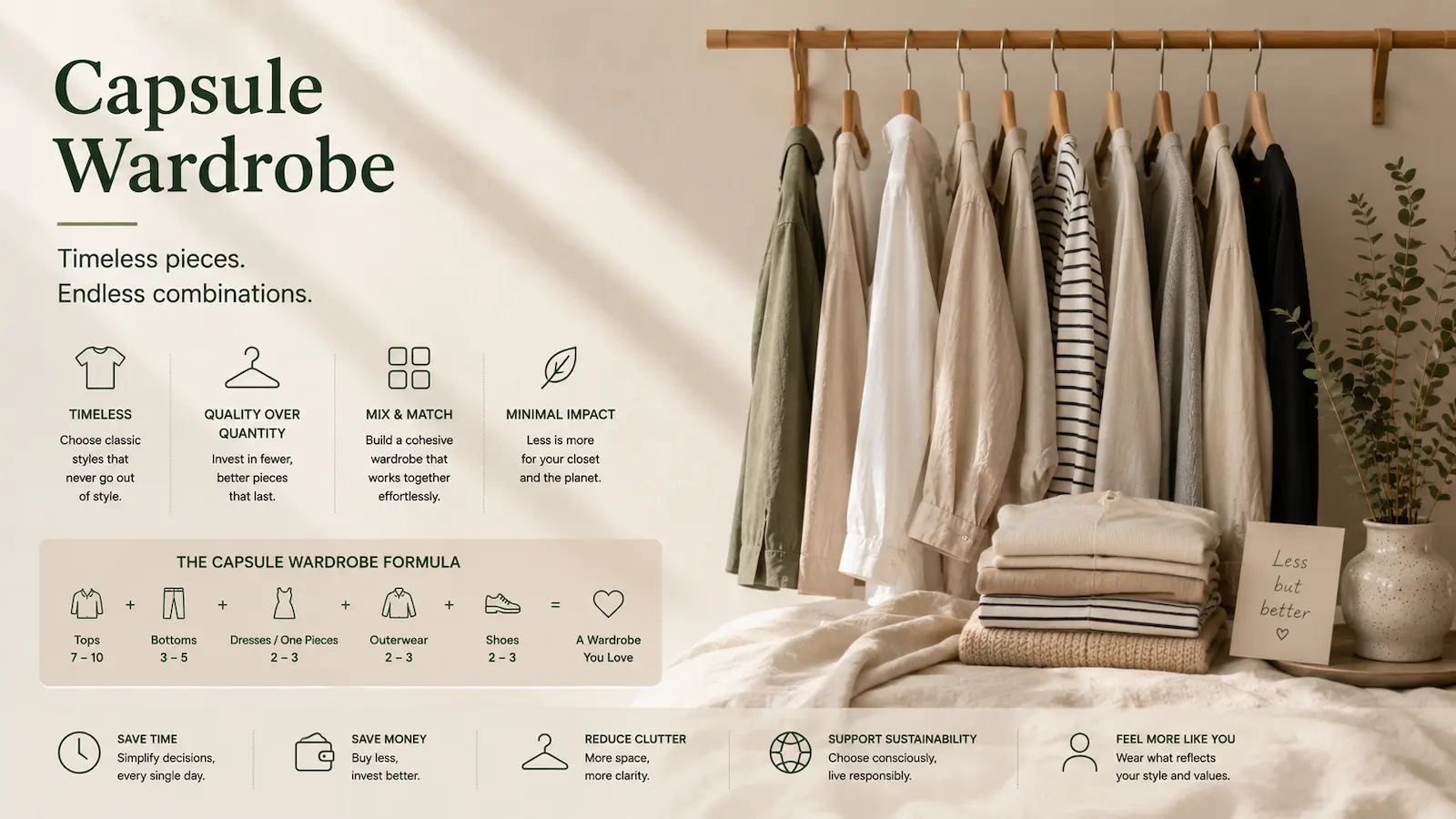
The term gets used so often it's lost some meaning. A capsule wardrobe is simply a small, curated collection of clothing where everything works together. Every item fits well, suits your lifestyle, and can be combined with at least three other things you own. The number thirty is often cited, but the number matters far less than the intention.
"A capsule wardrobe isn't about having less. It's about having exactly enough — and knowing what that means for you."
The process — start with a clear-out
Step 1: take everything out
Yes, everything. Pile it on your bed. This physical confrontation with the volume of what you own is important — it makes abstract numbers real. Most people are genuinely surprised by what they find.
Step 2: keep only what you reach for
Go through each item and ask: have I worn this in the past year? Does it fit well right now, not in theory? Do I feel good in it? If the honest answer to any of these is no, it's a candidate for the donate pile. If you're unsure, put it in a box for three months. If you don't miss it, you have your answer.
Step 3: identify your palette
Look at what you kept. Most people naturally gravitate to a consistent colour range. Lean into it. A capsule wardrobe built around three or four complementary colours means almost everything mixes with almost everything else — which is where the "endless outfits" claim actually becomes true.
Live with your edited wardrobe for at least one month before purchasing anything. Gaps become obvious quickly — and you'll know exactly what to look for rather than buying speculatively.
Buying for the long term
The second half of building a capsule wardrobe is being more deliberate about what comes in. One useful framework: imagine wearing this item fifty times. Does that feel realistic? Is the quality good enough to hold up? Does it work with what you already own?
- Buy less, but spend more per item on things that will last
- Natural fibres — cotton, linen, wool — age better than synthetic blends
- Classic cuts outlast trends; invest in those over seasonal pieces
- Second-hand first — many high-quality pieces exist already, unworn
A year after building my first capsule wardrobe, I get dressed faster, spend less, and feel consistently more like myself. The wardrobe is smaller. The decision fatigue is gone. And the clothes I own — I genuinely love every single one of them. That alone was worth the process.