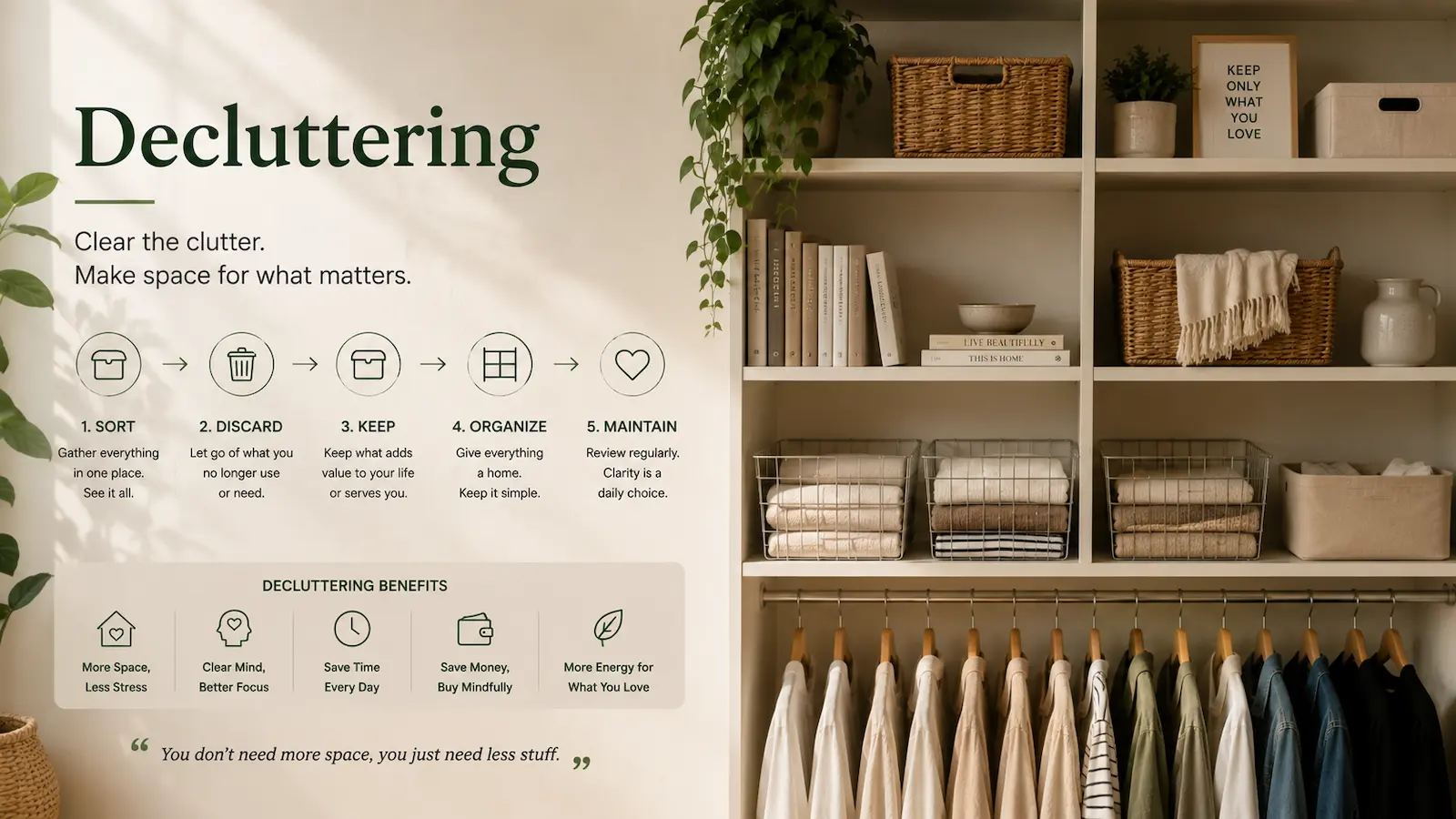
Every January, the decluttering content floods in. Dramatic before-and-afters. The promise of transformation in a single weekend. The instruction to take everything out, put it all in a pile, and only keep what sparks joy. For some people, this works brilliantly. For many others — myself included for years — it creates a different kind of chaos, then shame when the pile returns within months.
The gentler alternative is slower, quieter, and in my experience, far more permanent. One room. One category. One decision at a time.
Why slow decluttering works better
The all-at-once method works against how our brains process decisions. Decision fatigue is real — after making a certain number of choices, our ability to make good ones deteriorates sharply. Trying to decide the fate of every object you own in a single session almost guarantees poor decisions at the end, which means either keeping things you should release or releasing things you'll regret.
"Decluttering isn't an event. It's a practice — something you return to, season after season, as you and your life change."
The room-by-room method
Choose one room and commit to it
Start with the room that bothers you most — the one that drains your energy when you walk in. Don't split your attention across multiple spaces. One room, fully finished, gives you both clarity and momentum.
Work in sessions, not marathons
Thirty to forty-five minutes is ideal. Set a timer. When it goes off, stop — even if you're mid-category. This keeps the process feeling manageable rather than punishing, and means you can do it on a Tuesday evening rather than waiting for a free weekend that may never come.
The three-box system
Keep three boxes or bags visible as you work:
- Keep — things you actively use or genuinely love
- Donate/sell — things in good condition that could serve someone else
- Let go — things that are worn out, broken, or no longer useful to anyone
The critical rule: the donate box leaves your home within 48 hours of filling it. Not next week. Not when you get around to it. Within 48 hours. This prevents the common pattern of boxes sitting in hallways for months, quietly returning items to circulation.
If you genuinely cannot decide about an item, box it with a date written on the outside — three months from now. If you haven't needed or missed it by that date, donate it without reopening the box. You've already made the decision.
The order that works best
Start with low-emotional-charge areas: the bathroom cabinet, the kitchen junk drawer, the hall cupboard. Build your decluttering muscle before you reach the harder spaces — the wardrobe, the sentimental items, the boxes from your childhood home that have moved with you three times without ever being opened.
Six months after starting this process room by room, my home feels genuinely different. Not perfectly minimal — I'm not interested in that. But considered. Everything in it is there because I chose it, not because I haven't gotten around to dealing with it yet. That quiet sense of intention, carried through every room, is the real reward.