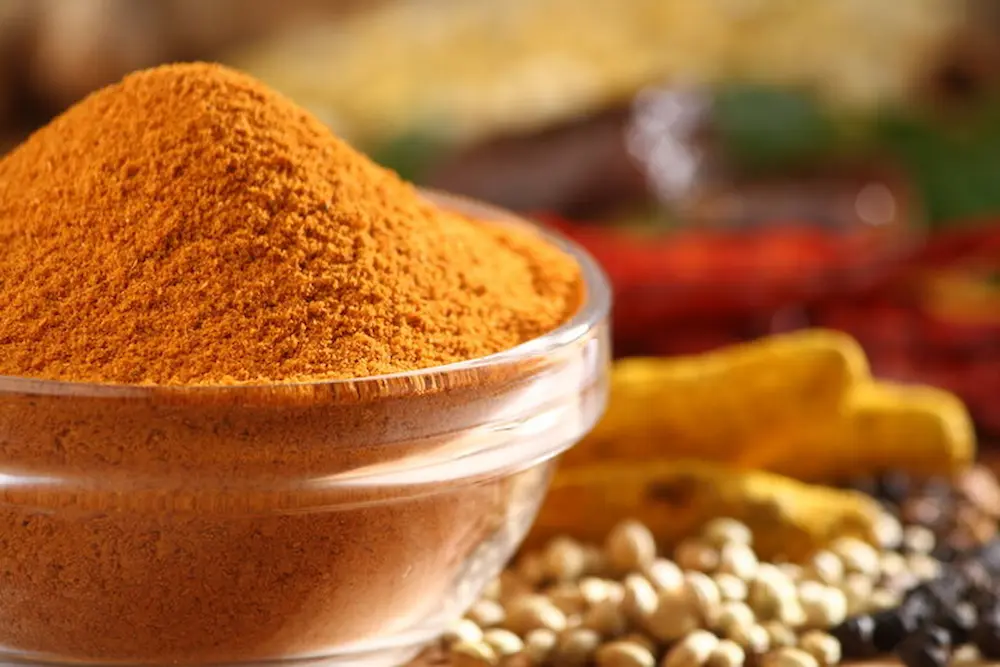
How to make it
- 1Dry the curry leaves first
If using fresh curry leaves, spread them on a plate and leave in a dry spot for 24 hours, or microwave on low for 2 minutes until crisp. Wet curry leaves make a moist, clumped powder.
- 2Roast the dals first — they take longest
In a dry pan over low heat, roast the chana dal, urad dal, and toor dal separately, stirring constantly, until they turn a light golden colour and smell nutty — about 5–6 minutes each. Transfer to a plate and cool.
- 3Roast chillies and whole spices
In the same pan, add the dry red chillies, coriander seeds, cumin, peppercorns, and fenugreek seeds. Roast on low for 4–5 minutes until fragrant. Add the dried curry leaves for the last minute only. Transfer and cool.
- 4Do not roast the turmeric or hing
These are added directly to the grinder — roasting turmeric makes it bitter, and hing only needs the heat of the finished dish to bloom.
- 5Grind in batches if needed
Sambar powder has many ingredients — grind in two batches if your grinder is small. Combine both batches and grind once more together to ensure a uniform blend. Add turmeric and hing and pulse to combine. Sieve and store.
Fenugreek seeds (methi) give sambar its characteristic slight bitterness that balances the tamarind's sourness. The quantity matters: too little and the sambar tastes flat; too much and it becomes unpleasantly bitter. Stick to ½ tsp for a 120g batch and adjust from there in your next batch.
Where to use sambar powder
- Add 2 tbsp desiccated coconut for a Chettinad-style, richer sambar powder
- Use only Byadagi chillies (milder, more colour) for a less spicy, deeply red powder
- Increase coriander seeds to 6 tbsp for a more aromatic, less pungent blend
- Add 1 tsp poppy seeds for a nuttier, thicker-bodied sambar